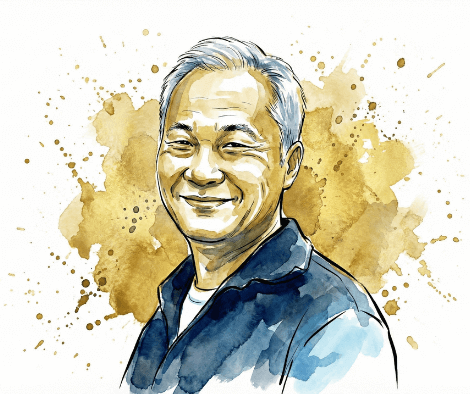
Explore the complete Blog of Dr. Tan’s Balance Method Acupuncture. Dive into the history, philosophy, and life of Dr. Tan himself, alongside practical case studies and clinical insights to master the method.
Connect with the global network. We have curated a comprehensive directory of all Dr. Tan Balance Method groups, forums, and independent communities so you can find every discussion in one place.
Simplify your learning with the ultimate reference guide. These notes decode Dr. Tan’s Balance Method Acupuncture into clear, easy-to-understand concepts for instant application.
Master the method through official training. Join seminars and classes designed to teach you the authentic Dr. Tan Balance Method, from basic concepts to advanced clinical strategies.
See the Dr. Tan Balance Method in action. Watch high-quality video demonstrations to refine your needling technique, angles, and precise point location.
Looking for treatment or a colleague? Locate certified Balance Method specialists worldwide on our official global map.
Balance Method Acupuncture represents a paradigm shift in modern acupuncture practice—a systematic return to the classical roots of Channel Theory developed by the renowned Dr. Richard Teh-Fu Tan.
Unlike conventional approaches that often apply herbal-based Zang-Fu diagnosis to acupuncture, Balance Method is strictly based on Meridian Theory and the precise interactions of channel pathways.
The result? A logical, reproducible clinical system that delivers what ancient texts promised but modern practice had largely lost: immediate, observable results.
The philosophy driving Balance Method is captured in the Chinese phrase Li Gan Jian Ying (立竿見影):
"Stand a pole under the sun and you see the shadow immediately."
In clinical practice, this means patients should feel a significant shift in symptoms—reduction in pain, change in sensation, improved mobility— within seconds of needle insertion.
This isn't hyperbole. It's the standard.
When Dr. Richard Teh-Fu Tan opened his practice in San Diego in 1989, he noticed colleagues complaining about slow results and unpredictable outcomes. Treatments took weeks or months. Patients were frustrated. Acupuncturists were discouraged.
Yet the classical texts were clear: acupuncture should work immediately.
Dr. Tan refused to accept this disconnect. Over twenty years treating thousands of patients, he refined a systematic approach that consistently delivered instant, visible results—returning acupuncture to its classical promise.
Patients experiencing chronic pain feel relief within minutes. Range of motion improves before their eyes. Symptoms shift predictably and reproducibly.
This is Balance Method Acupuncture.
What distinguishes Balance Method from other acupuncture styles is the exclusive use of distal needling.
A practitioner following Dr. Tan's teachings will never insert a needle directly into the site of pain or injury.
The Light Switch Analogy
Think of it this way:
If a lightbulb in your ceiling is flickering or broken, you don't climb a ladder to tinker with the bulb while the electricity is live. Instead, you approach the switch on the wall to control the flow of electricity.
In Balance Method:
By stimulating specific points located far from the injury—often on the arms, legs, or scalp—the practitioner opens blocked meridians, allowing Qi and blood to flow through the affected area.
This reduces inflammation and pain without the risk of aggravating local tissues.
The body is an energetic circuit. The meridian system is the wiring. By accessing strategic switches on this circuit, we can influence areas throughout the entire system—instantly and effectively.
Balance Method follows a rigorous, logical framework that eliminates the guesswork often associated with acupuncture point selection.
Step 1: Diagnose the Sick Meridian
Instead of labeling a condition simply as "migraine" or "sciatica," the practitioner must identify exactly which energetic pathway the pain traverses.
For example:
This precise diagnosis is the foundation of effective treatment.
Step 2: Determine the Treating Meridian
Based on the logic of the I Ching and Ba Gua, Dr. Tan identified six systems of balancing relationships between the twelve main meridians.
These mathematical relationships dictate which channels can effectively offload or balance the energy of the sick meridian.
Example: Under System 1, the Hand Tai Yin meridian can balance the Foot Tai Yin meridian due to their shared anatomical naming—both are Tai Yin channels.
This systematic approach transforms meridian selection from intuition into logical deduction.
Step 3: Point Selection
Once the correct balancing meridian is chosen, the practitioner searches for sensitive points (Ashi points) that correspond to the anatomy of the painful area.
This is where Mirroring and Imaging come into play.
While Balance Method is renowned for treating pain, its application extends deep into internal medicine through the concept of Global Balance.
Local Balance vs. Global Balance
Local Balance utilizes one meridian to treat another—ideal for musculoskeletal conditions and localized pain.
Global Balance weaves multiple meridians together to treat the entire system simultaneously—essential for functional disorders:
✓ Insomnia and sleep disturbances
✓ Digestive issues (IBS, bloating, constipation)
✓ Gynecological problems (menstrual pain, fertility, menopause)
✓ Emotional imbalances (anxiety, depression, stress)
✓ Chronic fatigue and systemic weakness
By constructing a geometric pattern of four or more meridians that balance one another dynamically and statically, the practitioner can harmonize the entire body's Zang-Fu organs without ever needling the trunk.
This holistic approach ensures the root cause of the disorder is addressed alongside manifesting symptoms.
Understanding the distinction is crucial:
Traditional Chinese Medicine (TCM) Approach:
Balance Method Approach:
Both approaches have value, but Balance Method's mechanical and energetic precision offers a fundamentally different clinical experience—one focused on instant feedback and reproducible outcomes.
By mastering the relationships between meridians, the Balance Method practitioner becomes an engineer of the human energetic system.
Rather than relying on years of intuitive development, practitioners apply:
✓ Logical frameworks based on Ba Gua relationships
✓ Mathematical patterns of meridian correspondences
✓ Holographic mapping systems (Mirror and Image formats)
✓ Immediate clinical feedback to verify point selection
✓ Systematic protocols that are teachable and reproducible
The practitioner is flipping switches on the body's energetic circuit board, capable of restoring health instantly by opening the correct pathways.
This systematic nature makes Balance Method:
Balance Method Acupuncture was developed by Dr. Richard Teh-Fu Tan, whose unique background created the perfect foundation for this innovation:
Early Training - Began studying Chinese medicine at age 7 in Taiwan, apprenticing with masters in Channel Theory, Five Elements, and classical acupuncture.
Clinical Crucible - Treated hundreds of patients in a Taiwanese army hospital alongside Western medical providers, where results had to be immediate and undeniable.
Engineering Education - Spent a decade studying systems engineering in the United States, developing the analytical framework that would transform how he approached meridian relationships.
Relentless Innovation - Twenty years of clinical practice in San Diego, treating thousands of patients, continuously testing and refining his systematic approach.
Dr. Tan's genius was recognizing that the I Ching and Ba Gua weren't mystical concepts but mathematical systems that could be applied to meridian relationships with engineering precision.
His legacy lives on through thousands of practitioners worldwide who continue using Balance Method to deliver the immediate results he always promised.
Balance Method is effective across a remarkably broad spectrum:
Pain & Musculoskeletal (using Local Balance):
✓ Back pain and sciatica
✓ Neck and shoulder pain
✓ Knee and joint pain
✓ Headaches and migraines
✓ Sports injuries and trauma
✓ Arthritis and chronic pain
✓ Post-surgical pain
✓ Neuropathy
Internal Medicine (using Global Balance):
✓ Digestive disorders (IBS, bloating, reflux)
✓ Insomnia and sleep disturbances
✓ Anxiety, depression, and stress
✓ Allergies and sinus problems
✓ Fatigue and low energy
✓ Immune system support
✓ Respiratory conditions
Women's Health:
✓ Menstrual irregularities and pain
✓ Fertility support
✓ Menopausal symptoms
✓ Pregnancy-related discomfort
Neurological Conditions:
✓ Stroke recovery
✓ Bell's Palsy
✓ Tremors
✓ Dizziness and vertigo
The systematic nature of Balance Method makes it applicable to virtually any condition that acupuncture can address—often with faster and more consistent results than traditional approaches.
Dr. Tan was passionate about teaching his method to as many practitioners as possible. His mission was simple: help acupuncturists become better so they can help more patients.
The logical, systematic nature of Balance Method makes it highly teachable — students can begin achieving clinical results quickly rather than relying on years of intuitive development.
Today, Balance Method continues to be taught worldwide through:
Certified Training Programs - Learn the Three-Step Strategy, imaging systems, and Global Balance protocols. Explore upcoming classes →
Essential Books - Dr. Tan's published works remain fundamental texts:
View complete book collection →
Visual Learning Tools - For practitioners seeking a clear, visual approach to mastering Balance Method, the Balance Method Notebook offers comprehensive visual explanations from beginner to advanced levels, created by experienced practitioner and educator Laurence with 8+ years of Si Yuan training and teaching experience.
Online Community - Connect with practitioners worldwide, share cases, and continue learning through Facebook groups dedicated to Balance Method.
Video Demonstrations - Watch the Three-Step Strategy in action, observe needling techniques, and see immediate clinical results .
Balance Method employs sophisticated holographic mapping systems to achieve precise point selection:
The Mirror Format
Maps one limb onto another based on anatomical correspondence:
Clinical Application:
If a patient presents with right knee pain, the practitioner can effectively treat it by needling specific points on the left elbow.
The mirroring creates an energetic correspondence that allows treatment at a distance.
The Image Format
Maps the limbs onto the trunk of the body or the head.
Universal Image: The entire body can be mapped onto a single limb:
This allows treatment of complex internal disorders or torso pain using only points located on the extremities.
These imaging systems transform the human body into an energetic hologram where every part reflects the whole.
Looking for a certified Balance Method practitioner in your area?
Our Global Practitioner Directory connects patients with trained acupuncturists worldwide who specialize in Dr. Tan's systematic approach.
Whether you're seeking:
...a Balance Method practitioner can help.
Dr. Tan's favorite saying was simple yet profound: "Life is Beautiful."
This wasn't just words—it was how he approached healing.
Balance Method isn't about fighting disease or attacking symptoms. It's about restoring balance, opening blocked pathways, and activating the body's innate healing capacity.
The practitioner doesn't force healing—they simply flip the switch to allow the body's natural intelligence to do what it does best: heal itself.
When the pole is placed, the shadow appears.
When the meridians are balanced, the body heals.
When balance is restored, life is beautiful.


